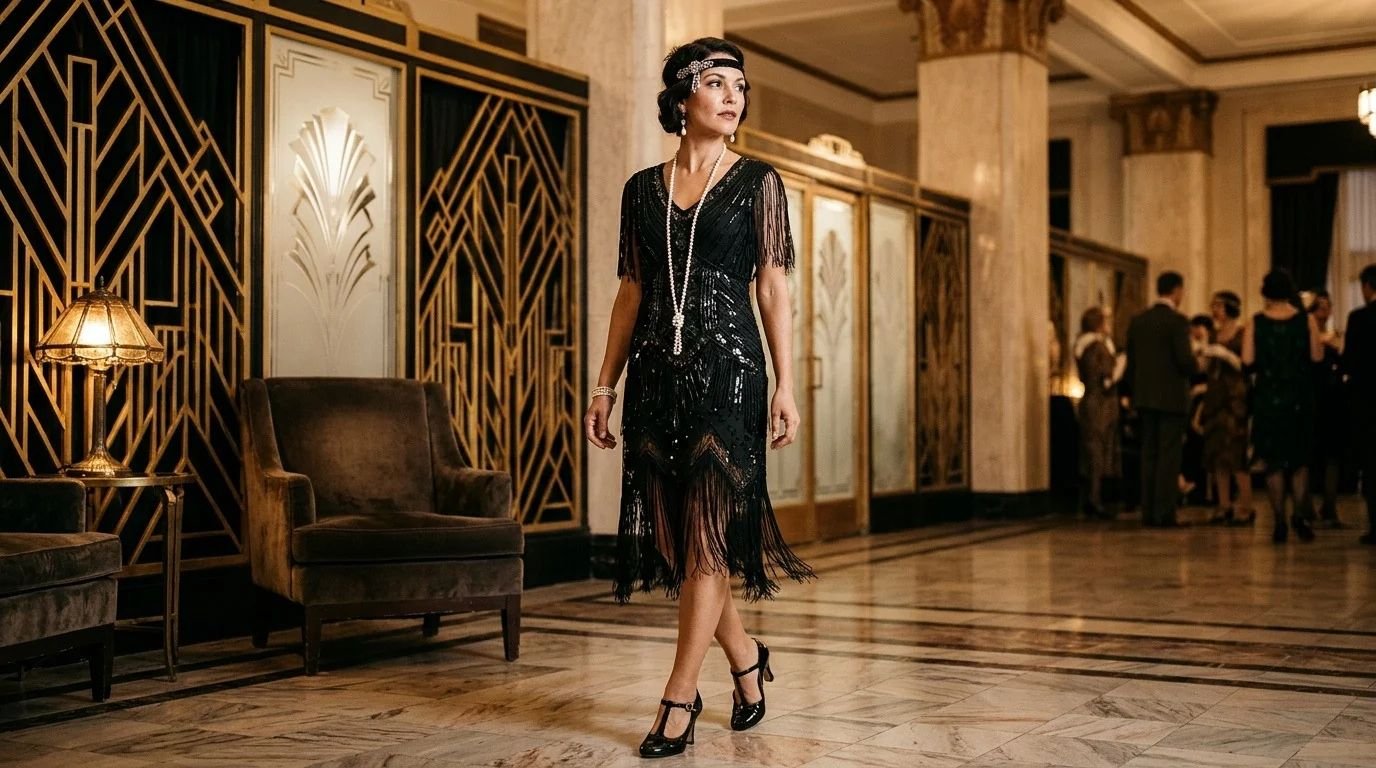
If you have ever wondered what did flappers wear, the short answer is this: loose drop-waist dresses, bobbed hair, close-fitting cloche hats, long strands of pearls, T-strap shoes and bold dark lips. It was a look built for dancing, freedom and a little rebellion, and it still shows up on runways, in party outfits and in costume closets almost a century later.
Flappers fashion was more than a set of clothes. It was a statement about who women wanted to be after World War I. In this guide, we will walk through how flappers dressed from head to toe, clear up a few popular myths, and show you how to wear the flapper look today without looking like you are in a costume.
Quick Answer: What Did Flappers Wear?
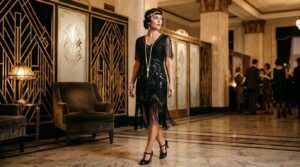
- Dresses: Straight, loose shift dresses with a low waistline, often beaded, fringed or made of light silk and chiffon
- Hair: Short bobs, shingled cuts and the daring Eton crop
- Hats: Snug cloche hats pulled low over the eyebrows
- Shoes: T-strap and Mary Jane shoes with a low heel, often with buckles or beads
- Jewelry: Long pearl ropes, beaded necklaces, bangles and sparkly headbands
- Makeup: Deep red lips, dark smoky eyes, pale powder and thin arched brows
Who Were the Flappers?
The flappers were young women of the 1920s, often called the Jazz Age, who broke away from the strict rules their mothers lived by. They cut their hair, danced to jazz, wore makeup in public and chose comfort over restriction. Many had just gained new freedoms, like the right to vote in several countries, and more women were working and earning their own money.
Fashion was the easiest way to show this new attitude. Clothes became lighter, simpler and far easier to move in. For the first time, a fashionable woman did not need a tight corset to look stylish.
How Did Flappers Dress? Signature Flapper Fashion
If you want to understand how did flappers dress, start with the silhouette. The 1920s look was straight and boyish, with the waist dropped down to the hips. Designers moved away from the curvy hourglass shape of earlier decades and favored a relaxed, tube-like line that skimmed the body instead of shaping it.
Drop-Waist and Shift Dresses
The drop-waist dress is the heart of flapper fashion. The seam sat low around the hips, the skirt was loose, and the bodice hung straight down. Because these dresses were simple in construction, many women could sew them at home using store-bought patterns. That made trendy clothing available to far more people than before.
For daytime, dresses were made from cotton, wool jersey and lightweight silk. Chanel became famous for soft jersey outfits in neutral shades like beige, navy and black, and her simple black dress became a style classic that is still copied today.
Beaded and Fringe Evening Dresses
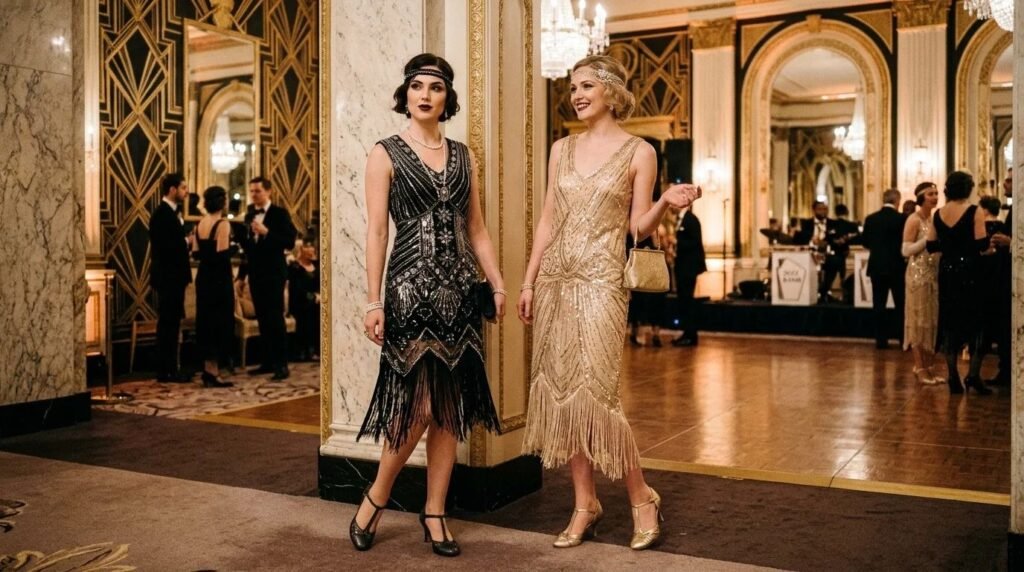
The real showstoppers were the evening dresses. Flappers headed out at night in gowns covered in glass beads, sequins and long fringe. The fringe was not just decoration. It swayed with every step and made dances like the Charleston look even more dramatic.
Fabrics included silk, chiffon, velvet and artificial silk, which we now know as rayon. Popular colors ranged from soft pastels to deep jewel tones, along with plenty of gold and silver.
The Hemline Myth
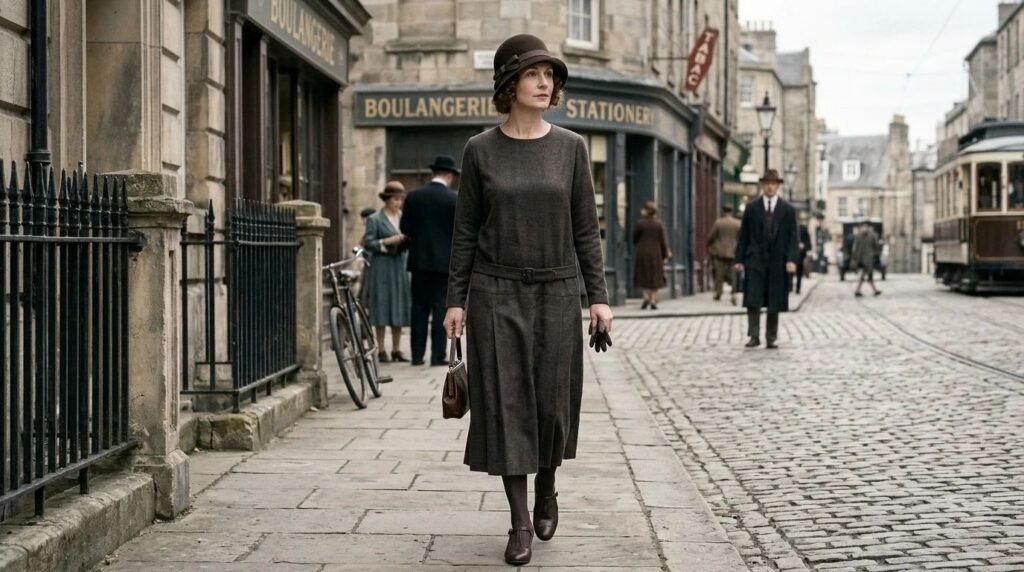
Here is something many people get wrong. We often picture flappers in very short skirts, but for most of the 1920s, hemlines were actually around the calf. Skirts rose gradually through the decade, and the knee-baring look only appeared for a short stretch in the middle to late 1920s.
Old film clips of dancers kicking up their legs helped create the idea that everyone dressed this way all the time. In reality, many day dresses were modest by modern standards. Dresses with uneven, scalloped or handkerchief hems also created the illusion of movement without showing much leg.
Coats and Outerwear
When the weather turned cold, flappers reached for long wrap coats that closed to one side with a big button or buckle. Fur collars and cuffs were very fashionable, and some women matched the coat lining to the fabric of their dress. A fox fur stole draped over the shoulders was another popular choice for evenings out.
Flapper Era Clothing: Underwear and Stockings
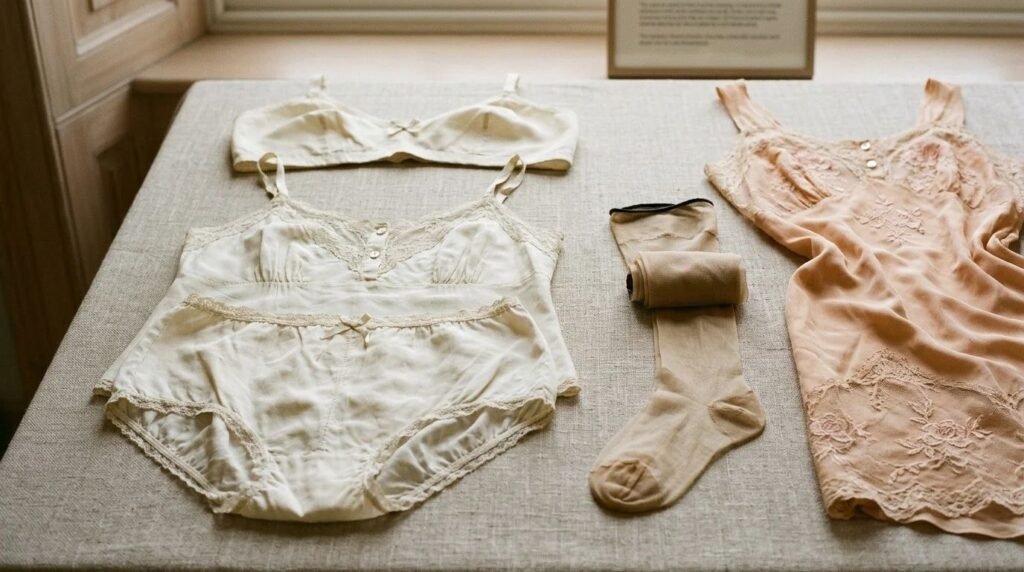
What flappers wore under their dresses mattered as much as the dresses themselves. The goal was a slim, flat, boyish shape, and the clothing underneath was designed to match.
Bandeau Bras and the Flat Silhouette
Instead of supportive bras, women often chose bandeau-style garments that flattened the bust. This created the straight line that the loose dresses were designed to follow. Corsets did not disappear overnight, but heavy boned versions faded fast as lighter elastic girdles and simple slips took their place.
Rolled Stockings and Lightweight Underwear
Underwear became lighter, shorter and sheerer. Camiknickers, which combined a camisole and knickers in one piece, were popular and comfortable.
Stockings changed in a big way too. Before the 1920s, many women wore dark, thick stockings. Flapper era clothing introduced flesh-toned silk and rayon stockings, sometimes with embroidery near the ankle. Some of the boldest flappers rolled their stockings down to the knee so they could dance freely, which shocked older generations.
Flapper Hair and Hats
Nothing signaled a flapper like her hair. Long hair had been seen as a woman’s crowning glory for centuries, so cutting it short was a huge, bold move.
Bob, Shingle and Eton Crop
- The bob: A chin-length cut, usually with a straight fringe or waves around the face
- The shingle: Shorter at the back and tapered close to the neck
- The Eton crop: A very short, slicked-back cut that looked almost like a man’s haircut and was considered the most daring of all
Film stars like Louise Brooks and Clara Bow helped make these styles famous, and women everywhere copied them at the hairdresser.
Cloche Hats
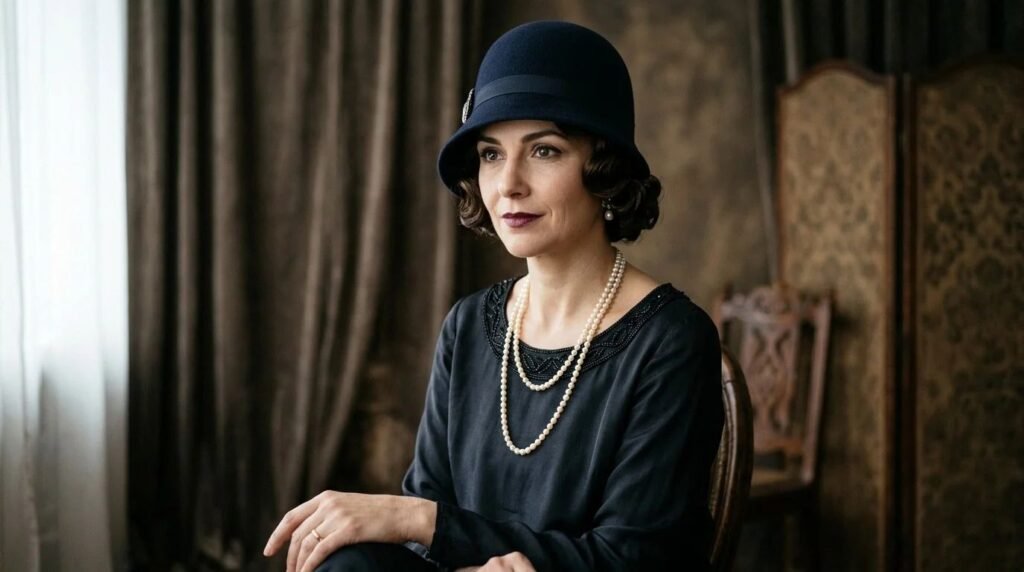
The cloche hat, whose name comes from the French word for bell, was the must-have accessory. It fit tightly around the head and was pulled down low over the eyebrows. Because of this snug shape, it only worked with short hair, so it quietly announced that the wearer had joined the new generation.
Wearing one even changed how women carried themselves. With the brim so low, they often tilted their heads slightly up to see where they were going, which gave flappers their confident, chin-up look.
Headbands and Feathers
For evenings, many women swapped the cloche for a jeweled or beaded headband worn low across the forehead. Feathers, sequins and brooches added extra sparkle, and this look is still the one most people picture when they think of a Gatsby-style party.
Flapper Shoes and Accessories
With shorter hemlines came more attention on the feet. Shoes were now visible, so they became a real fashion statement.
Mary Jane and T-Strap Shoes
Strapped shoes were the style of the decade. The Mary Jane had a single strap across the ankle, while the T-strap added a vertical strap running up the front of the foot. Heels were usually low to medium and often slightly curved, which made them easier to dance in. Buckles, bows, beads and sequins were common decorations, and many pairs were made in two-tone leather or satin to match the outfit.
Pearls, Bracelets and Other Accessories

Accessories turned a simple dress into a complete flapper outfit:
- Long pearl ropes worn looped, knotted or swung while dancing
- Stacked bangles and cuff bracelets, often in Art Deco patterns
- Drop earrings in glass, crystal or faux gemstones
- Beaded or fringed handbags just big enough for a lipstick and compact
- Feather fans and long cigarette holders for a touch of drama
Costume jewelry became hugely popular because it let women change their look often without spending a fortune.
Flapper Girl Fashion: The Makeup Look
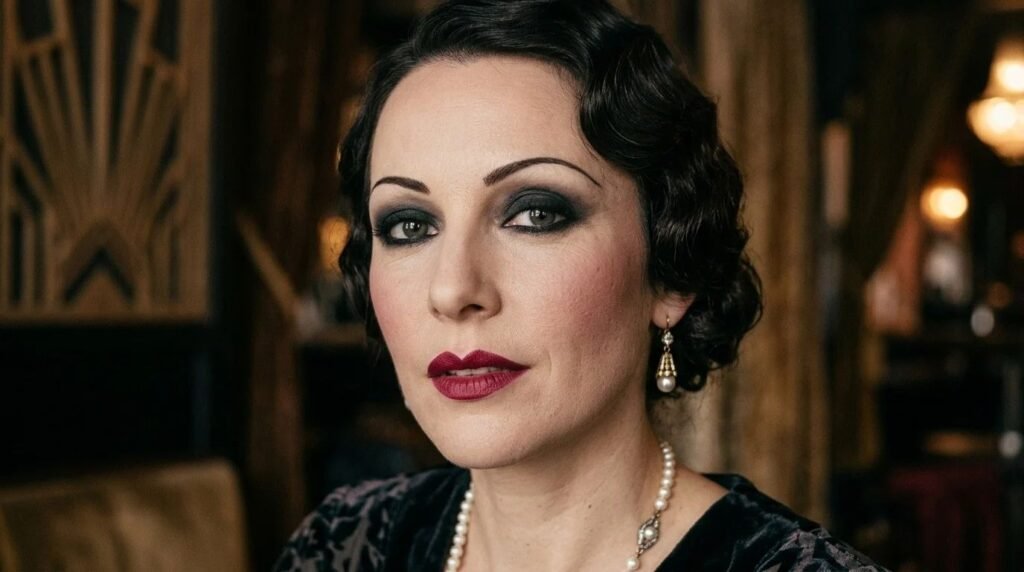
Makeup was a big part of flapper girl fashion. Before this era, heavy makeup was often linked with actresses and was considered improper for respectable women. Flappers changed that and happily applied lipstick and powder in public, using engraved compacts that quickly became collectible.
The classic look included:
- Lips: Deep red, plum or berry shades painted into a small cupid’s bow shape
- Eyes: Dark kohl liner and shadow for a smoky, dramatic effect
- Brows: Thin, rounded or sharply arched, often drawn with a pencil
- Skin: A pale, powdered base with a touch of rouge on the cheeks
The silent film stars of the time, with their dramatic eye makeup, were a major influence on this style.
Flapper Fashion vs Other 1920s Styles
It is easy to lump everything from the 1920s into one “flapper” category, but fashion in that decade was richer than one look. Flapper style was most common among young, urban women who were eager to try new trends. Older women often wore longer, more conservative versions of the same silhouette.
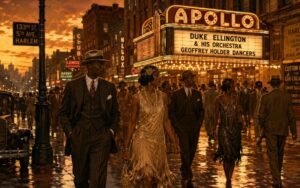
The decade also saw powerful style movements in different communities. If you want to see how 1920s fashion developed in a very different cultural setting, our guide to Harlem Renaissance fashion shows how tailored suits, elegant dresses and bold personal style helped express identity and pride during the same era.
The famous “Gatsby look” is also slightly different from everyday flapper clothing. Gatsby-style outfits focus on glamorous evening wear, with lots of beading, feathers and luxury fabrics, while real everyday flapper outfits were usually simpler.
How to Dress Like a Flapper Today
You do not need a full vintage costume to enjoy this style. A few smart choices can bring 1920s charm into a modern outfit.
Everyday Outfit Ideas
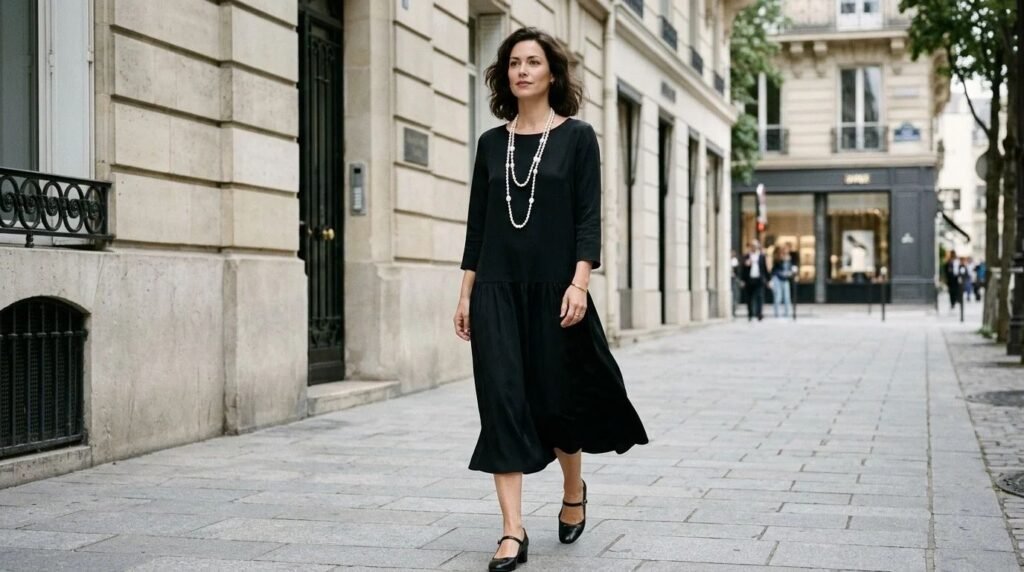
- Pair a drop-waist or straight midi dress with a long pearl necklace and flat Mary Jane shoes
- Add a sparkly headband to a simple evening outfit for an instant vintage touch
- Choose a beaded or sequin top with high-waisted trousers for a subtle Art Deco feel
- Try a bold red lip with otherwise minimal makeup for a modern take on the look
- Layer a long cardigan or wrap coat over a slip dress to echo the relaxed 1920s silhouette
Flapper Costume for a Party or Halloween
If you are dressing up for a themed party, use this simple checklist:
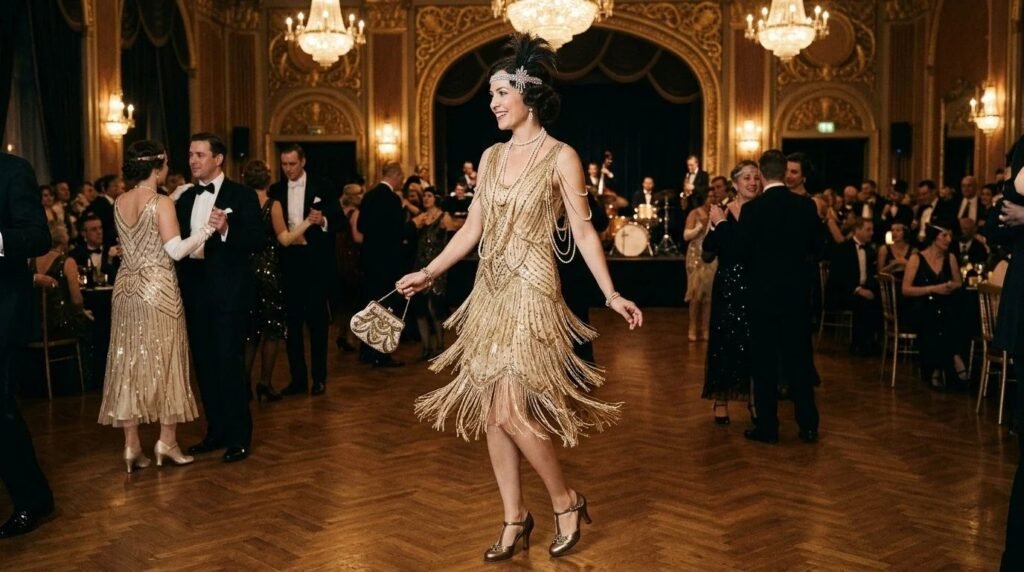
- A fringe or beaded dress in black, gold, silver or champagne
- A feather headband or sequin headpiece
- Long pearls or layered beaded necklaces
- T-strap or Mary Jane shoes
- Dark red lipstick and smoky eyes
- Optional extras: gloves, a feather boa, a clutch bag and a cigarette holder prop
For hair, a faux bob wig or a pinned-up bob with finger waves will complete the look.
Keeping It Modern
The secret to wearing flapper fashion every day is choosing one or two statement pieces and keeping the rest simple. A beaded dress paired with modern heels and minimal jewelry looks chic. A full costume with every accessory might be great for a party, but it can feel heavy for daily wear.
Frequently Asked Questions
What did flappers wear to parties?
At parties, flappers wore sparkling drop-waist dresses covered in beads, sequins or fringe. They finished the look with long pearls, jeweled headbands, T-strap shoes and dark lipstick, and the loose cut let them dance the Charleston comfortably.
How did flappers dress differently from earlier women?
Earlier generations wore corsets, long skirts and high necklines. Flappers chose looser dresses, shorter hair, lighter underwear and visible makeup, which gave them far more freedom of movement and a more youthful look.
Did flappers really wear short skirts?
Only for part of the decade. Most dresses stayed around calf length for years, and skirts were at their shortest in the middle to late 1920s, when the knee was sometimes visible. By the end of the decade, hemlines started to drop again.
What hairstyle did flappers have?
Flappers wore short hair, mainly the bob, the shingle and the Eton crop. Many styled their bobs with soft waves and wore a cloche hat on top.
What shoes did flappers wear?
They wore strappy shoes with low to medium heels, especially Mary Janes and T-straps. Many were decorated with buckles, bows or beads and made for dancing.
Can I wear flapper style today?
Yes. Choose a few pieces, such as a drop-waist dress, long pearls, a headband or a red lip, and mix them with modern items so the outfit feels fresh instead of costume-like.
Final Thoughts
So, what did flappers wear? They wore loose drop-waist dresses, cloche hats, bobbed hair, long pearls, strappy shoes and bold makeup, all chosen to match a lifestyle full of music, dancing and independence. Flapper fashion changed how women dressed forever, and its influence is still easy to spot in modern style. Whether you borrow one accessory or build a full outfit, the 1920s look is an easy way to add some Jazz Age sparkle to your wardrobe.